
Being a college student, there are a few things I depend on to keep my sanity—coffee and Netflix.
One night, as I was lying in bed attempting to convince myself that it would be far more beneficial for me to get a head start on my reading assignments than scrolling through Netflix, I came across a sitcom called One Day at a Time.
What was it about this show that drew me in? Was it the title’s funky font? Was it my unusual obsession for quirky sitcoms? Yes and yes!
But it was also the fact that the family was clearly Latinx (and no, that’s not short for Latino Kleenex). So I decided to give it a try, and after I binged watched the first five episodes, I was HOOKED! Reading assignments be damned!
More information on this Netflix original: it centers on a Cuban American family with Penelope at the center, a single mother who is raising her two children, Alex and Elena, with the help of her mother, Lydia. This show far exceeded my expectations of what Latinx American sitcoms bring to the table in terms of entertainment. Granted, the only two comparisons I have that fit within that sub-genre are George Lopez and Cristela. Both were amazing shows in their own right; however, I do think One Day at a Time brings something fresh to Latinx American sitcoms and the entertainment industry as a whole.
Gloria Calderón Kellett, one of the co-showrunners of One Day at a Time, beautifully layers this show with a near flawless balance of comedy and drama and, in the process, creates a show that is woke.
The comedy is clever, it being relatable to a general audience while also alluding respectfully to inside jokes within the Latinx community. And if you’re wondering, yes, vivaporu does get its time in the spotlight, it attempting to miraculously save the day (as it usually does). In addition to its comedy, however, the drama portions of the show are also incredibly well written and performed, as One Day at A Time continually addresses emotionally-charged, complex issues many American families face. And rarely (if ever) are these scenes diminished or cheapened by unwarranted comedic relief.
The episode that arguably displays this balance the best is “Viva Cuba.”
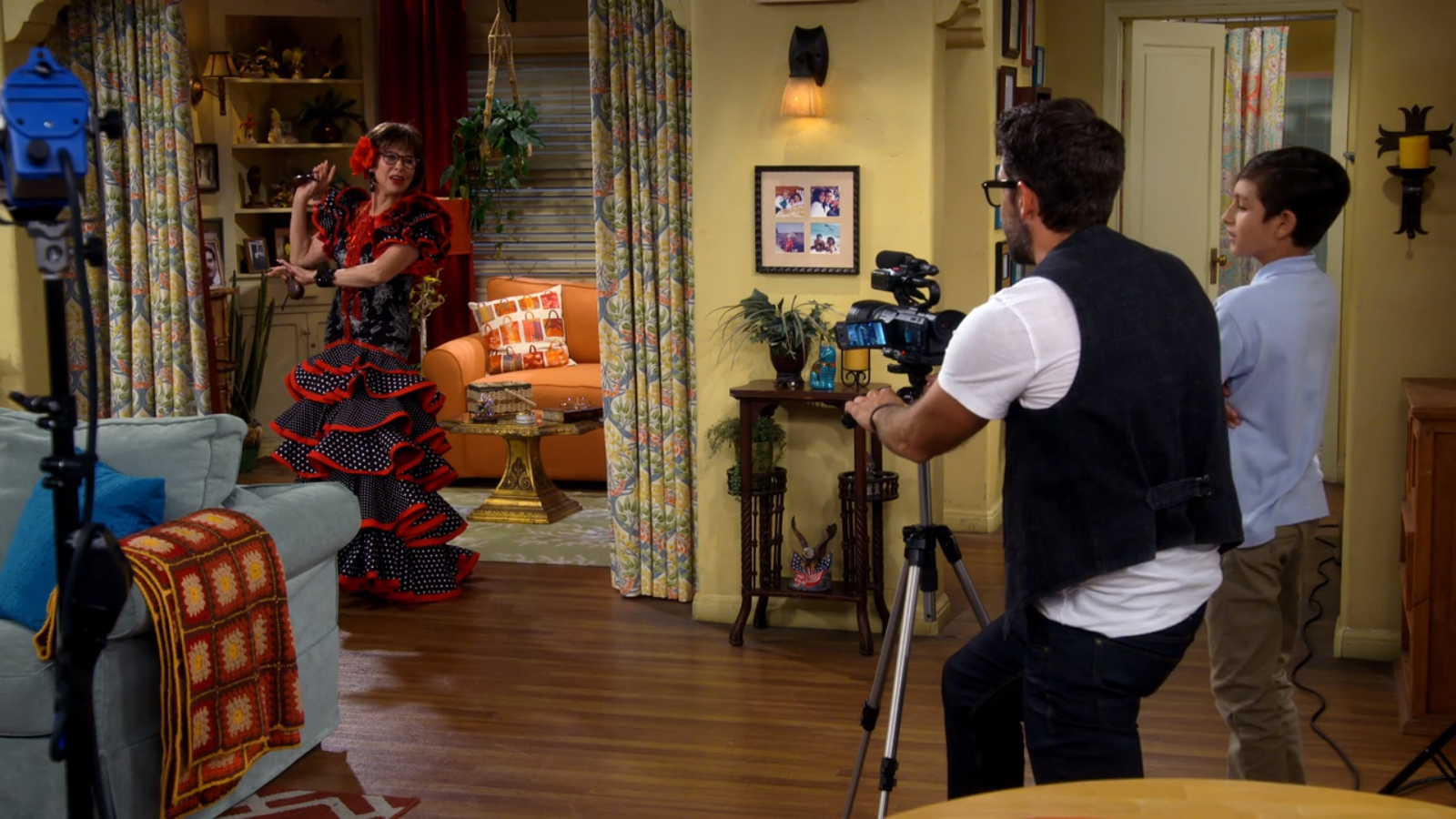
Having chosen to do a school project on Cuba, Alex finds himself surprised that he is going the extra mile. His mom, sister, and abuela, being supportive of Alex’s academic endeavors, wear exuberant outfits and help him film a humorous yet harrowing documentary that features his abuela talking about growing up in Cuba and being one of the children selected for Pedro Pan. Pedro Pan, as Lydia puts it, was a program “that started during the revolution to fly children out of Cuba and give them safe haven in the United States until Castro left.”
The scene steadily becomes heart-rending as Lydia reflects on this part of her past—coming to the U.S. with her younger sisters, having very little to almost nothing, not knowing the English language, and leaving behind her home and beloved family.

As I watched this episode, I blubbered like a baby.
I will not lie, at times this show can be a bit overwhelming, as it attempts to invoke within its viewers a wide range of emotions. And for that reason, it is worth the watch. Kellett masterfully addresses complex topics, such as the one presented in “Viva Cuba”, in an approachable and realistic fashion. One Day at a Time talks about everything from misogyny, to mental health, to queer identity, to racism, to immigration, and so much more.
I can’t even begin to imagine the process of producing such a show that addresses a myriad of complex subject matter. But still, I think Kellett believes there is a need for it, as do I. Things like misogyny, racism, and homophobia are prevalent throughout our society, and topics such as immigration, mental health, and queer identity, in one way or another, are stigmatized, especially within Latinx communities. Having a show that approaches these topics with such sincerity and that provides its viewers with many good laughs, and even some tears, helps combat that stigma.

Am I saying this show is perfect? No. Every good show has its flaws and inconsistencies, as does this one. On top of that, I refuse to believe that any one thing or person is fully woke, but I do believe that it is something that should be continually worked towards. In the end, we could all do a better job at recognizing and addressing oppression and stigmatization and the effects both of these things have on us, whether it be within our daily lives, the entertainment industry, or society as a whole.
It brings me great joy to see shows being produced by such talented individuals, such as Kellett, that tell such powerful stories with Latinx families at their center. What’s more, shows that invoke a profound feeling of empathy within a mixed audience. I am happy to hear that this show will be sticking around to see its third season and will continue to be there for others to stumble upon as they’re scrolling through Netflix, thinking about getting a head start on their reading assignments.
That reminds me…I have some reading to do.
Follow me on Instagram: @alt.me23
Here are some things you should check out!
An interview with Gloria Calderón Kellett (video): “How I Got A Show On Netflix: Gloria Calderón Kellett” by Pero Like
A deeper look at the word “woke” (article): “How ‘woke’ went from black activist watchword to teen internet slang” by Charles Pulliam-Moore
A brief discussion on the word “Latinx” (video): “What’s The Deal With ‘Latinx’?” by Pero Like

 ericeamador.com
Leave a comment